Who doesn't love an unsolved, true mystery? Today's topic is ghost ships: vessels lost at sea, their crews vanished without explanation. We explore ten eerie, historical cases.
10. The Young Teazer
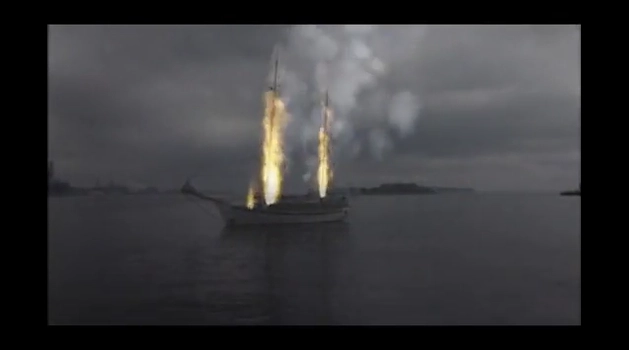
The Young Teazer was a fast and cunning pirate ship that terrorized Canada's Atlantic coast in the early 19th century. In 1813, it was cornered in Mahone Bay by a schooner under Sir John Sherbrooke. Facing capture, the pirates chose to blow up their own ship, with witnesses seeing an officer ignite the magazine.
This event spawned Nova Scotia's most enduring ghost story: the "Teazer Light." Each year on June 27, the anniversary of the explosion, locals report seeing an eerie orange glow over the water and even hearing the agonized screams of the long-dead crew in the fog.
9. The MV Joyita
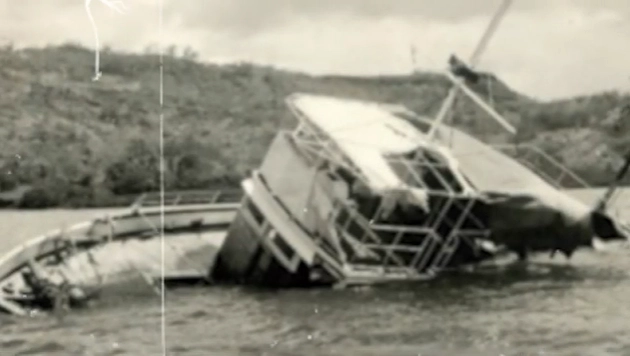 The American merchant vessel Joyita vanished en route to New Zealand in 1955. Five weeks later, it was found abandoned over 600 miles off course, with no distress signal sent and no reports of severe weather. Investigators discovered no signs of foul play, no bodies, and only minor evidence like a doctor's bag and some bloodied bandages. The crew seemed to have simply disappeared.
A key clue was a decay-like smell noted at the scene. In 2002, researcher David Wright proposed a theory: chronic leakage through a corroded pipe in the cooling system gradually flooded the ship. The vessel eventually succumbed, partially sinking and leading to the loss of all on board.
8. The Octavius
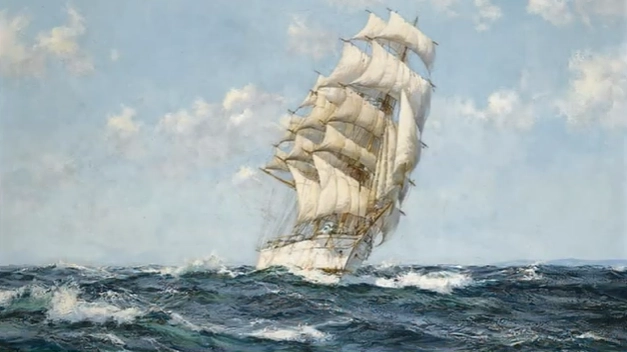 In 1761, the British ship Octavius set sail from China for London, attempting a direct northern route through the Arctic Passage—a voyage never before completed. It disappeared soon after and was not seen again until 1775, when the whaler Herald discovered it adrift near Greenland.
The Herald's crew boarded and found the entire crew frozen and dead below deck. The captain was preserved at his desk, pen in hand, with a log entry from 1762. Terrified by the scene, the whalers fled and never returned. The Octavius was never seen again, leaving its fate a haunting maritime mystery.
7. The Lady Lovibond
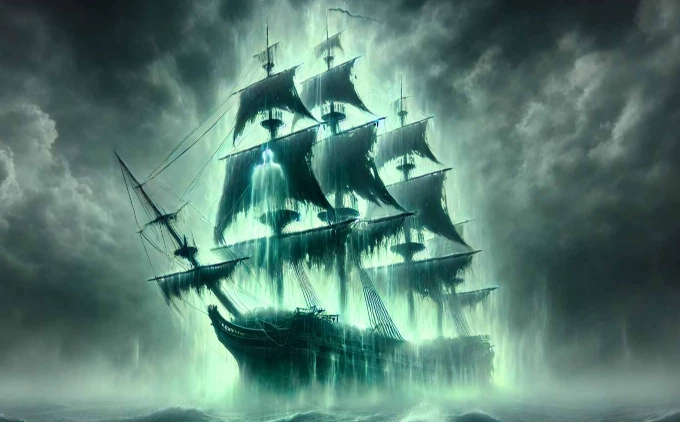 In February 1748, the Lady Lovibond sailed off England carrying its captain and wedding guests. During the voyage, the captain discovered his fiancée loved his best friend. Enraged, he deliberately wrecked the ship on Goodwin Sands, killing everyone aboard.
Over the next 300 years, many captains reported near-collisions with a ghost ship appearing suddenly near Goodwin Sands. The most notable sighting occurred 50 years later, when locals in Kent saw a three-masted ship heading at full speed toward the sands. A rescue party was sent, but no wreckage or survivors were ever found.
6. The Flying Dutchman
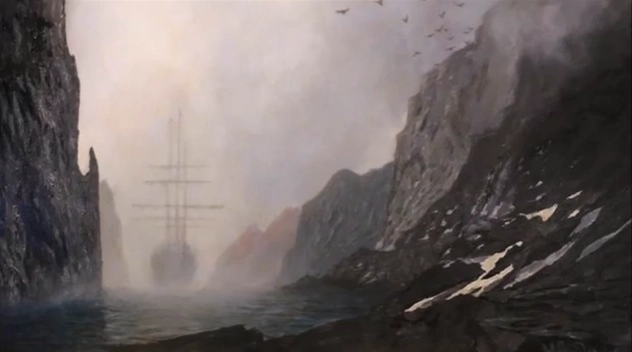 The Flying Dutchman is among the most famous ghost ships in folklore. According to the centuries-old Dutch tale, a captain cursed during a violent storm at the Cape of Good Hope is doomed to sail eternally. Having bargained his soul for safe passage, he and his ship are condemned to an endless oceanic purgatory.
Sightings have been reported since the early 19th century. Dutch sailors first claimed the ship appeared suddenly off Africa. Throughout the 1800s, multiple Dutch and German vessels reported encounters, with logs describing the phantom ship approaching under full sail or emitting an eerie red light. These persistent accounts have cemented the legend across decades.
5. The SS Valencia
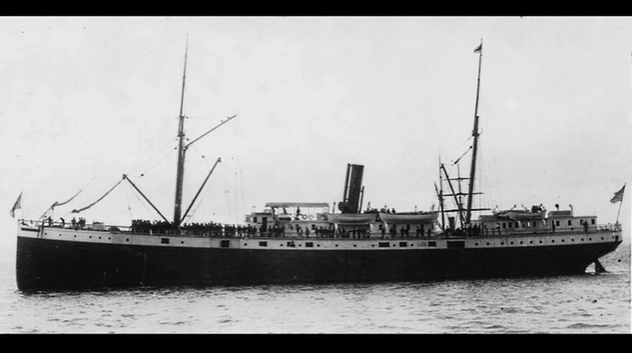 In 1906, the SS Valencia sank off British Columbia in a storm, with only 37 of 108 souls surviving. By 1910, locals reported eerie sightings of phantom lifeboats carrying skeletons, linked to the wreck by newspapers like the Seattle Times.
Decades later, in 1933, the ship’s No. 5 lifeboat was found fully intact in Barkley Sound—untouched by weather or sea despite years adrift. The main wreckage was later discovered near a coastal bluff, but the lifeboat’s mysterious preservation remains unexplained.
4. The Ourang Medan
 In June 1947, the British ship Silver Star received a chilling distress signal from the Dutch freighter Ourang Medan in the Malacca Straits. The message stated all officers and possibly the entire crew were dead, ending with the words "I die." Upon reaching the vessel, the Silver Star's crew found the dead bodies of the crew and even the ship's dog, all with expressions of agony but no visible wounds or signs of attack.
While investigating, the rescuers smelled smoke and hastily evacuated. Moments later, the Ourang Medan exploded, leaving only debris and destroying all evidence. The cause remains unknown, with theories ranging from biological weapons linked to WWII to other mysteries. To this day, the fate of the Ourang Medan and its crew is unsolved.
3. The Eliza Battle
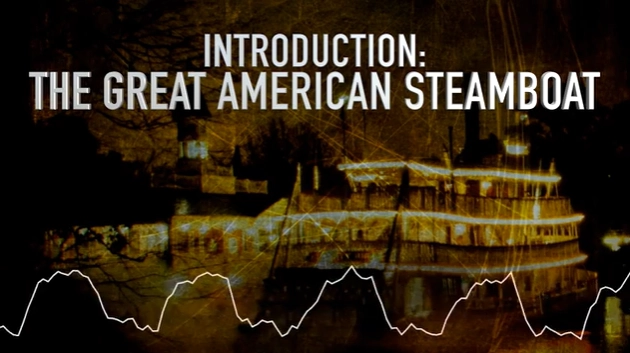 On March 1, 1858, the steamship Eliza Battle caught fire on the Tombigbee River while carrying over 1,200 cotton bales. Strong winds fanned a spark into a blaze that engulfed the vessel, forcing passengers and crew to jump overboard. The disaster claimed 33 lives from fire or drowning, marking one of the region’s worst maritime tragedies.
Locals claim the ghost ship still appears, burning as it drifts downriver, with the screams of the lost souls heard echoing over the water. This haunting legend persists, leaving many to shudder at the eerie tale of the Eliza Battle.
2. The Mary Celeste
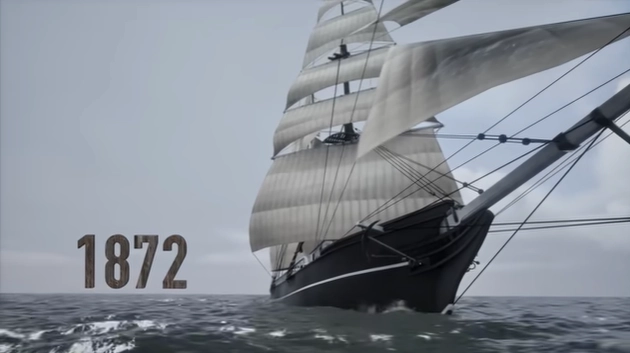 In November 1872, the merchant ship Mary Celeste sailed from New York under Captain Benjamin Briggs, carrying his family and eight crew. Less than a month later, on December 4, the British ship Dei Gratia found her abandoned and adrift in the Atlantic. The vessel was completely intact, with ample supplies and no signs of damage or struggle. The logbook ended abruptly on November 24 with normal entries, and the ship's lifeboat was missing.
The crew’s personal items, including their pipes, were left behind, suggesting a sudden, hurried departure. Yet no evidence explained why everyone vanished. Despite theories of mutiny, violence, or panic, no cause was ever confirmed. The fate of those aboard the Mary Celeste remains one of history's greatest unsolved mysteries.
1. The Carroll A. Deering
 On January 29, 1921, the schooner Carroll A. Deering was spotted off North Carolina by a lightship overseer, who noted the crew idling on deck. A crew member shouted they had lost their anchors. Days later, the SS Lake Elon observed the ship on a strange course. The Coast Guard soon found it aground, missing its lifeboats.
After the weather cleared, investigators discovered all personal belongings and papers were gone, yet a full, untouched meal was prepared for the entire crew. The mystery has fueled theories ranging from mutiny and Russian spies to the Bermuda Triangle, with no definitive explanation for the crew's disappearance.