Stop what you’re doing: These rare creatures look like they’re from a sci-fi movie—keep reading to see them all.
TOP 10. Violet-Backed Starling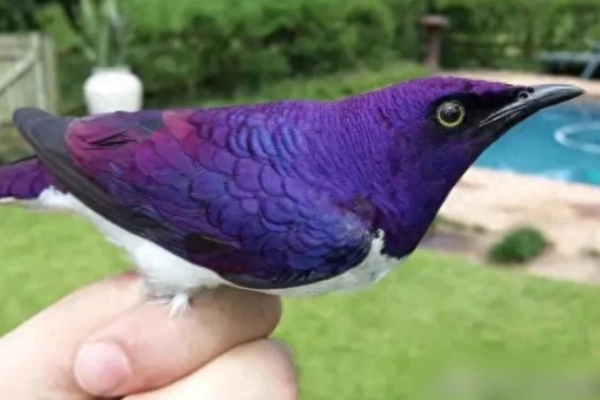
Found in tropical Africa, male violet-backed starlings rock stunning purple and indigo feathers with a sick metallic sheen—this cool glow comes from the tiny micro-structures in their feathers bending light! Females, though? They’re total plain Janes with brown plumage—classic case of sexual dimorphism at its finest!
TOP 9. Mycena interrupta
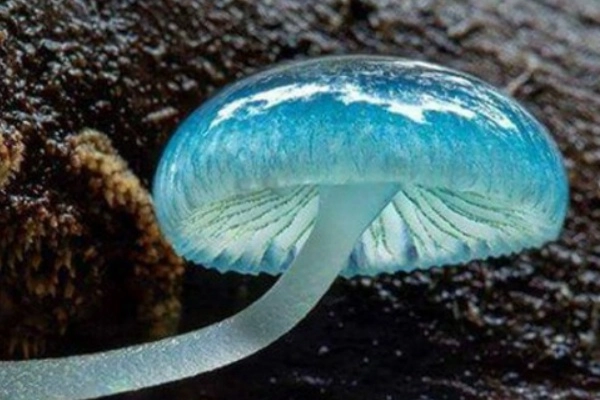
Native to Australia, these tiny mushrooms are bright sky-blue—like something out of a fairy tale! When they’re young, their caps are almost round little balls; as they grow up, they puff out a bit and get slightly sticky.
Their stems are thin and long, held onto rotting wood by a tiny white disc at the end. And get this—their gills are white with a faint blue tint, and they love growing in clusters on damp dead wood.
TOP 8. Black Serval
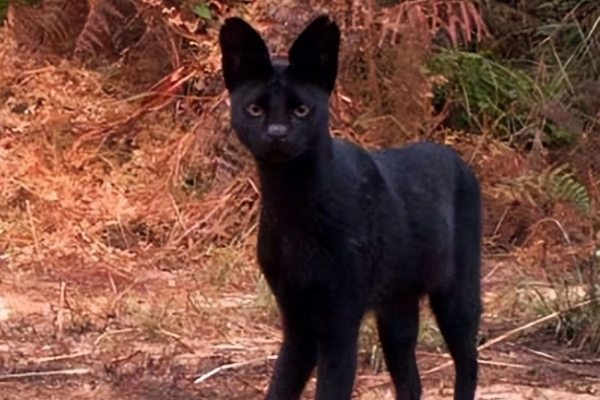
These are melanistic African servals (fancy word for "extra black" thanks to a rare gene!). That mutation makes their fur way darker than the usual golden coat with black spots.
They’re total lone wolves, hanging out mostly in high-altitude areas, and snack on rodents, birds, and bugs—your classic stealthy hunter vibe.
TOP 7. Ayam Cemani
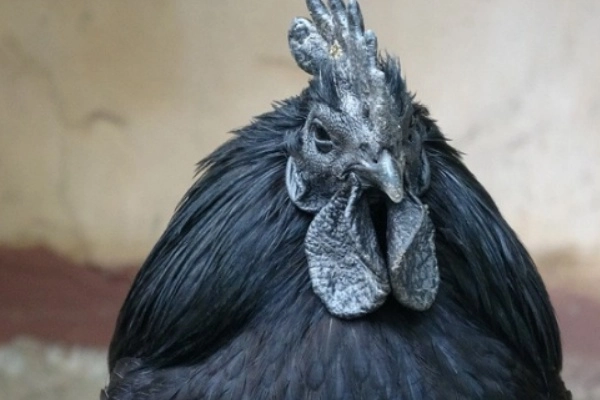
Hailing from Sumatra, Indonesia, the Ayam Cemani is the ultimate "goth chicken"—every single part of it is black! Feathers, beak, tongue, muscles, bones, even its internal organs—all deep black.
This is thanks to a fibromatosis gene mutation that cranks up melanin production to 11. But here’s the plot twist: their eggshells are just regular old cream-colored. Mind blown!
TOP 6. Papilio Androgeus Butterfly
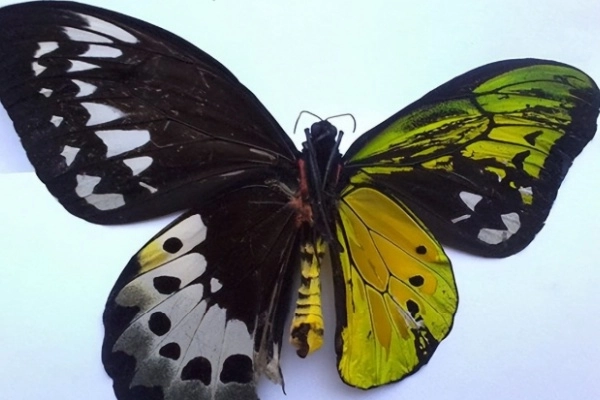
Part of the swallowtail butterfly crew, these guys live from Mexico and Florida all the way down to Argentina. But here’s what’s wild: besides regular males and females, some are gynandromorphs—split right down the middle!
One side of their wings has the male’s yellow pattern, the other the female’s blue. They’ve also got long tail-like bits, and their wings are dotted with rows of red and yellow crescent spots.
TOP 5. "Black Diamond" Apple
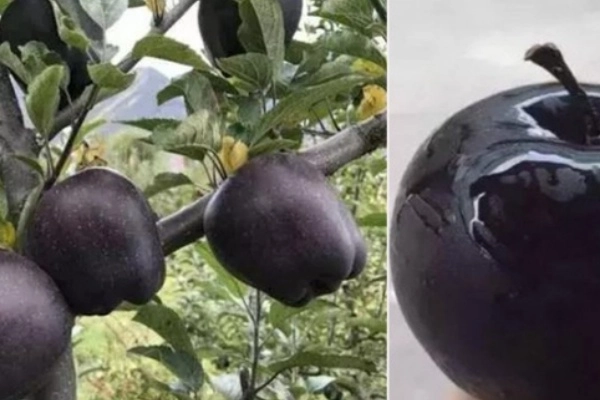
This rare apple is a variety of the Huaniu "Red General," grown mostly in Linzhi, Tibet, up in the high mountains. The intense UV rays and huge day-night temperature swings give its skin a deep purple waxy layer that shines like a polished gemstone—hence the "Black Diamond" nickname.
But the inside? Pure white, crispy, and juicy—total classic apple goodness, just with a fancy outer coat.
TOP 4. Hymenopus coronatus
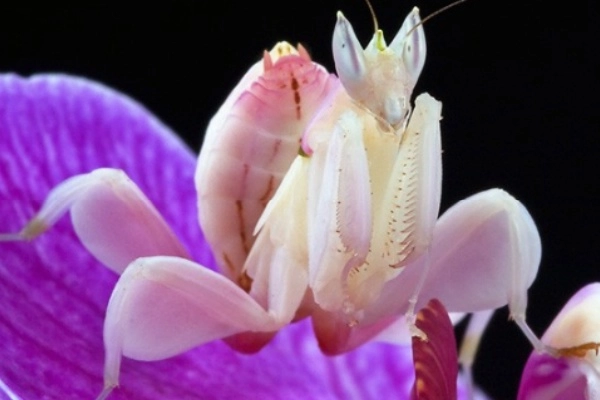
Native to Malaysia, these mantises are pure pinkish-white and look EXACTLY like orchid petals—even their legs mimic flower parts! They’re total masters of disguise; when they freeze, you’d never spot them among real orchids.
Pro tip: Males are way smaller than females, and their bright colors make them bird snacks—so not many make it to adulthood. Tough break!
TOP 3. Rhinoceros Iguana
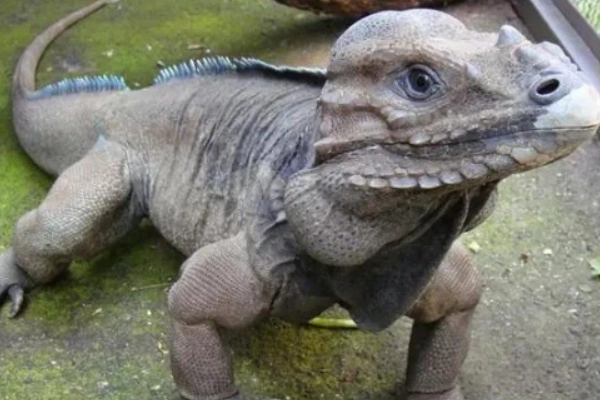
Originally from Hispaniola (the island where Haiti and the Dominican Republic are), these iguanas have a bony bump on their snout that looks like a tiny rhino horn—total tough guy energy!
They’re stocky, with colors ranging from dark gray to olive green, and hang out in rocks and bushes. But don’t let the mean mug fool you—they’re total herbivores, munching on fruit, leaves, and flowers all day.
TOP 2. Triboniophorus aff. graeffei
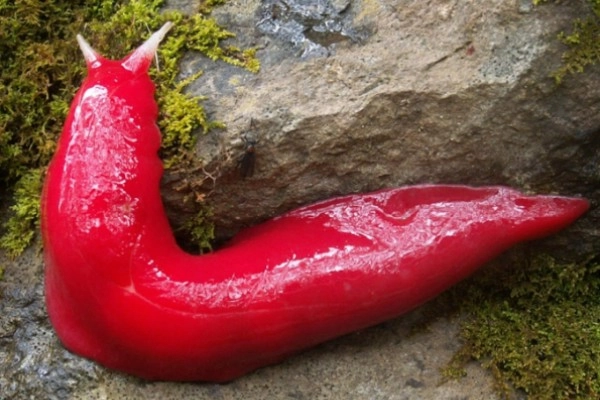
These slugs are found ONLY in the high-altitude forests of Australia’s Mount Kaputar (an extinct volcano, BTW)—and they’re absolute showstoppers. They’re huge (up to 20cm long!) and bright neon pink—like someone dipped them in a neon highlighter!
They love damp spots, hiding under tree roots and leaves during the day, then crawling up trunks in groups at night to chow down on algae and moss.
TOP 1. Andean "Two-Nosed Tiger Hound"
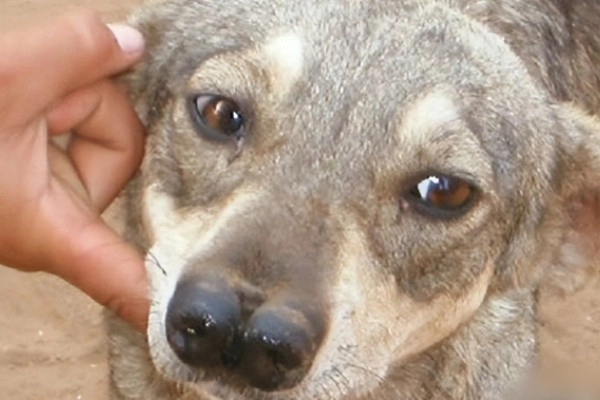
Taking the top spot is the legendary Andean "Two-Nosed Tiger Hound"—a pup with a nose split right down the middle! First spotted by explorers in the Amazon in 1913, there have only been a handful of sightings since.
They’re thought to be descendants of Pachon Navarro hounds brought over by conquistadors, and that split nose? It’s supposed to supercharge their sense of smell. With so few records, they’re still shrouded in mystery—total "is it real?" vibes.